Kyoto University Symposium on Social Common Capital in Washington DC on Nov. 24

  • HOME
  • ニュース
  • Kyoto University Symposium on Social Common Capital in Washington DC on Nov. 24
Kyoto University Symposium on Social Common Capital Beyond 2050
Synergistic Solutions for Planetary Health and Cultural Vitality

The Kyoto University Symposium on Social Common Capital Beyond 2050 brings together leading scholars, practitioners, and innovators to explore integrated approaches that address multiple global challenges simultaneously.

Building on the pioneering concept of Social Common Capital proposed by the late economist Dr. Hirofumi Uzawa, the symposium highlights new pathways for sustaining both human well-being and the natural environment.

In a special keynote, Dr. Uzawa’s daughter will reflect on her father’s vision of social common capital—public assets such as natural environments, cultural heritage, and social infrastructures that belong to all humanity—and its relevance to today’s intertwined crises.

The program features diverse perspectives, including:

-a cultural-prescription researcher demonstrating how cultural capital can measurably improve community health and resilience,

-a biodiversity scientist developing techniques by which carefully managed human intervention can create ecosystems even richer than their original wild state, and

-other scholars and entrepreneurs who are translating culture, nature, and finance into synergistic solutions that simultaneously enhance planetary health and cultural vitality.

The symposium invites academics, policy makers, social entrepreneurs, and global citizens to engage in dialogue and collaboration on how humanity can safeguard and expand our shared commons well beyond 2050.

Date and Time

Monday, November 24, 2025
4:00 PM – 5:45 PM (EST)
※3:30 PM~ Registration and Networking Reception

Venue

The National Press Club
529 14th Street NW, 13th Floor
Washington, DC 20045

Presenters/Speakers

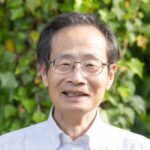
Prof. Naoki Kondo

Head at Center for Social Common Capital beyond 2050, Kyoto University

Professor Naoki Kondo is a leading scholar in social epidemiology, investigating how education, income, occupation, social connections, and community environments influence people’s health. His research demonstrates that public health cannot be protected solely by individual efforts such as exercising or quitting smoking; it depends on the design of social systems and policies that sustain well-being. At this Symposium, he will discuss how social common capital—including social relationships, health systems, and cultural resources—forms the foundation for a healthy society. His presentation will highlight the importance of restoring and redesigning these shared assets to reduce health disparities and enable everyone to live in good health as a natural condition of daily life. Professor Kondo’s work aims to connect empirical evidence with policy innovation toward building more equitable and resilient social systems. https://scholar.google.com/citations?user=ESq4XuAAAAAJ&hl=en

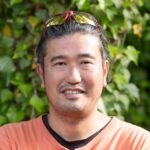
Prof. Masatoshi Funabashi

Specially Appointed Professor at SCC-Center in Kyoto University / President at SynecO, inc.

Dr. Masatoshi Funabashi is a complexity scientist and veterinarian exploring augmented ecosystems as an extension of Social Common Capital to natural-social systems. After completing his veterinary degree and MSc at the University of Tokyo, he earned his Ph.D. in Physics from the École Polytechnique in France, where he studied complex systems under French government and MEXT scholarships.

Since 2010, he has led research and implementation of Synecoculture, a novel agroecological method developed at Sony Computer Science Laboratories (Sony CSL). His initiatives have expanded globally, including the establishment of the Centre Africain de Recherche et de Formation en Synécoculture (CARFS) and pilot farms in over 20 countries, with collaborators across 30 nations.

He later founded the Synecoculture Association (2018) and SynecO, inc. (2021) to advance social implementation of augmented ecosystems. Currently a Professor at Kyoto University’s Center for Social Common Capital beyond 2050, Dr. Funabashi integrates complexity science, agroecology, and social innovation toward a sustainable and biodiverse planetary future.

https://scholar.google.com/citations?user=0Eb4M2MAAAAJ&hl=en

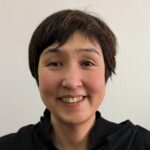
Dr. Marie Uzawa Urabe

CEO at Uzawa Kokusai Gakkan / Collaborative Researcher at Kyoto University SCC-Center

Dr. Marie Uzawa Urabe is a physician dedicated to strengthening community-based healthcare in Japan and the daughter of the late Hirofumi Uzawa, the renowned economist who introduced the concept of Social Common Capital—a framework that emphasizes the social foundations of a humane and sustainable economy.

After graduating from Jikei University School of Medicine, she conducted postdoctoral research at the Mayo Clinic from 1992 to 1994 and has since practiced as an internist engaged in regional medicine. Following Professor Uzawa’s passing in 2014, she became a Director of the Uzawa International Academy of Human Economy, where she works to preserve and communicate his intellectual legacy.

Through editorial projects such as The Human Economy (Shincho Shinsho) and public lectures, Dr. Urabe continues to share her father’s vision of an economy grounded in compassion, dignity, and the stewardship of shared social capital.

Dr. Keiichi Ishihara

Specially Appointed Professor, Kyoto University Beyond 2050 Initiative

Dr. Keiichi Ishihara is currently a Specially Appointed Professor at the Office of Institutional Advancement and Communications at Kyoto University, where he leads initiatives under the “Beyond 2050” vision for a sustainable, post‐carbon society. He holds a Doctor of Engineering degree from Kyoto University and is an expert in materials processing, non-equilibrium engineering, and advanced alloy systems.

In recent years, Dr. Ishihara has expanded his research to the social and infrastructural challenges that emerge as societies age—especially issues surrounding death, funerary systems, and solitary deaths. Through collaborative projects with private-sector partners, he examines the future configuration of crematoriums and other essential infrastructures in 2050 and beyond, as well as social mechanisms needed to support isolated individuals. Integrating engineering, social foresight, and system design, Dr. Ishihara works across disciplines to envision how societies can transition toward resilient, humane, and sustainable futures.

Organizer/Host

Office of Institutional Advancement and Communications, Kyoto University and
Center for Social Common Capital beyond 2050, Kyoto University

Registration / Participation Fee

Admission: Free (advance registration required)

Contact Information

scc-center(at)mail2.adm.kyoto-u.ac.jp / Kawamura, Shimizu

あなたも、2050年以降の世界を変えるチームになりませんか?

学歴も、資格も、スキルも関係なく、様々な人が参加して未来をつくっていける。そのような部門を目指しています。

ご寄付の使途・活用状況・達成率

最新のニュースの見出し